
Description
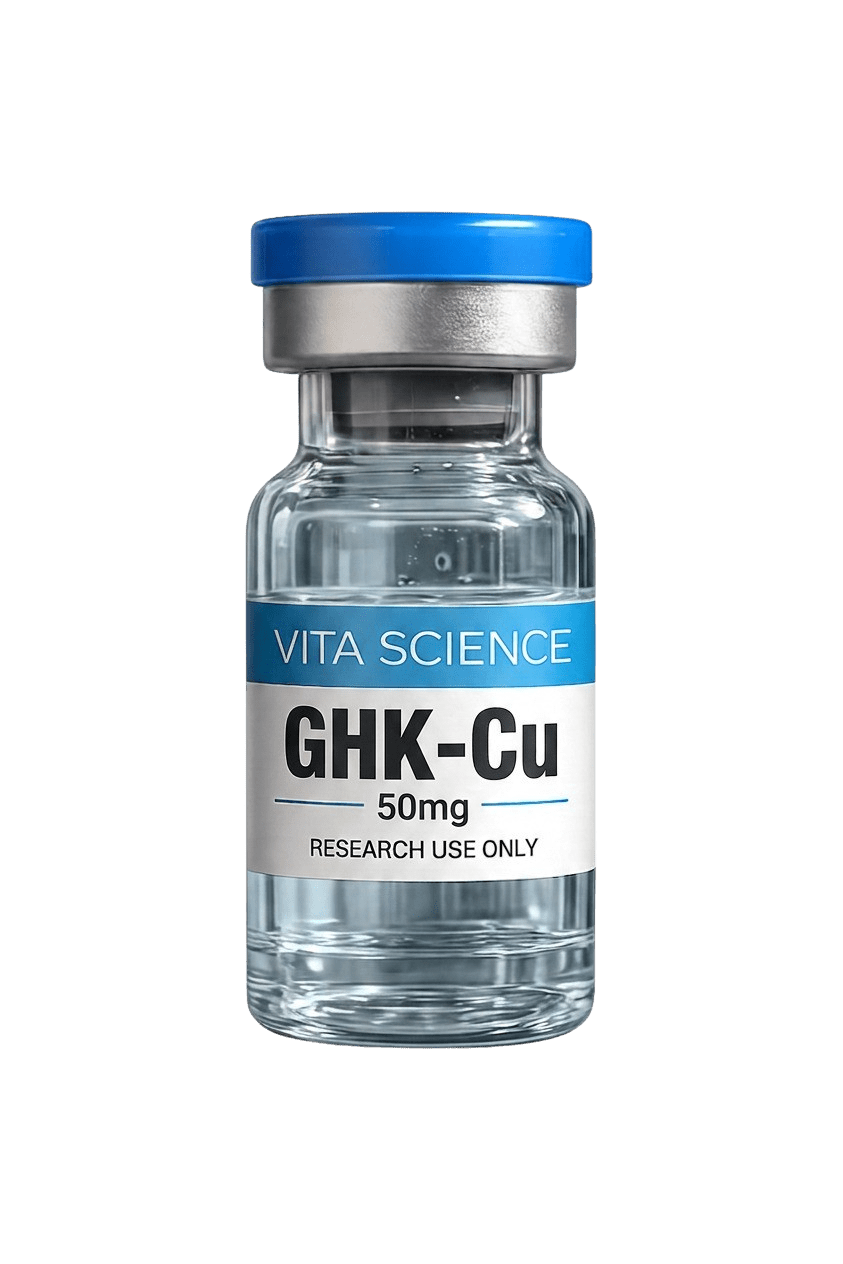
GHK-Cu 50mg – Copper Tripeptide
GHK-Cu, also known as copper tripeptide-1, is a copper-binding peptide composed of glycyl-L-histidyl-L-lysine associated with a copper ion. It has been investigated in skin biology, cosmetic science and laboratory research.
Scientific background
GHK-Cu has attracted scientific interest because of its interactions with biological processes involved in skin structure and tissue remodelling. Laboratory and preclinical studies have explored its relationship with collagen, extracellular matrix components and cellular repair pathways.
Some small human studies have investigated topical cosmetic formulations containing GHK-Cu. The available clinical evidence remains preliminary, and findings from topical products cannot be assumed to apply to oral or injectable preparations.
Cosmetic research
GHK-Cu is used in some cosmetic formulations under the ingredient name copper tripeptide-1. Research has examined skin appearance, fine lines, elasticity and other cosmetic outcomes. However, study sizes and product formulations vary, and the available evidence does not establish that every GHK-Cu product produces the same results.
Safety and formulation considerations
The formulation and route of administration are important. Topical cosmetic use and injectable use have different safety and regulatory considerations. Injectable GHK-Cu has limited human safety data, and the FDA has highlighted potential concerns involving immunogenicity, aggregation and peptide-related impurities in its compounding review.
Product identification
The supplied product title states 50mg. It does not establish the exact formulation, concentration, route of administration, manufacturer, batch identity, purity or sterility. These details require appropriate product documentation and independent verification.
Important: This information is educational and is not medical advice, a treatment recommendation or confirmation that a particular GHK-Cu product is authentic, approved or suitable for human use.
Safety and regulatory information
Topical cosmetic evidence: The American Academy of Dermatology notes that small placebo-controlled studies have reported improvements in certain skin appearance measures, but the evidence remains preliminary. Skin irritation, redness, burning and dermatitis are possible concerns with topical copper peptide products.
aad.org
Injectable formulation concerns: In its April 22, 2026 compounding update, the FDA stated that nominations for injectable GHK-Cu had been withdrawn from its Category 2 list. The FDA also stated that it intended to consult its Pharmacy Compounding Advisory Committee about possible future inclusion of GHK-Cu on the 503A bulk substances list before the end of February 2027. Withdrawal of a nomination is not FDA approval.
Updated April 22, 2026
Evidence limitations: Human evidence is mainly associated with small topical studies. It does not establish the safety or effectiveness of injectable or oral GHK-Cu.
LAB.LTD+1
Anti-doping: The 2026 WADA Prohibited List includes a general S0 category for pharmacological substances without current governmental approval for human therapeutic use. A substance falling within that definition may be prohibited at all times even if it is not individually named.
Frequently asked questions
What is GHK-Cu?
GHK-Cu is a copper-binding tripeptide made up of glycyl-L-histidyl-L-lysine associated with copper. It is also known as copper tripeptide-1.
What is the difference between GHK and GHK-Cu?
GHK is the three-amino-acid peptide. GHK-Cu is the copper-bound form of that peptide.
Is GHK-Cu used in cosmetics?
Yes. Copper tripeptide-1 is used in some topical cosmetic formulations. Cosmetic use does not establish approval for medical or injectable applications.
Does topical research prove injectable GHK-Cu is safe?
No. Evidence from topical cosmetic studies cannot be transferred directly to injectable preparations. Human safety evidence for injectable GHK-Cu is limited.
Is GHK-Cu an approved medicine?
It should not be described as an approved medicine. Regulatory status depends on the specific product, intended use and jurisdiction.
Does 50mg identify the concentration?
No. The title provides a stated quantity of 50mg but does not establish the concentration, formulation or amount per application.
Reviews
There are no reviews yet.